
Book Review: Essentialism — The Disciplined Pursuit of Less

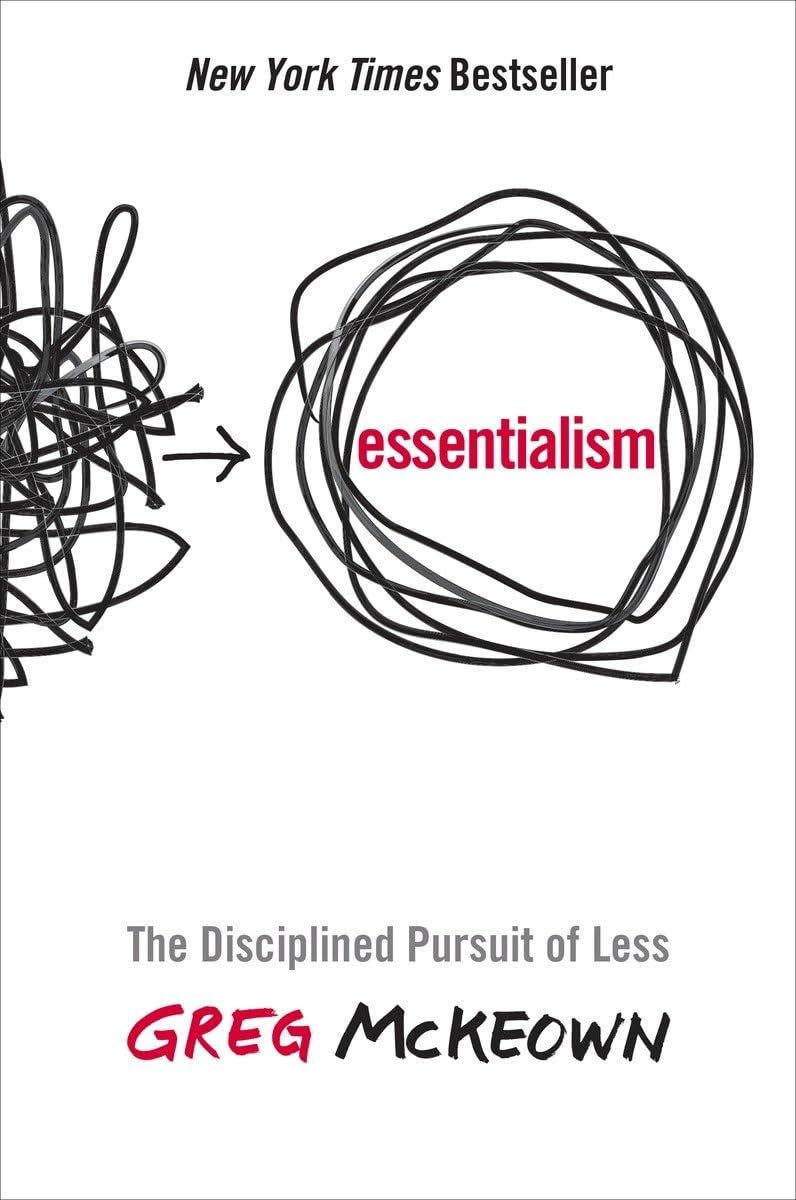
It has been a while since I read Essentialism: The Disciplined Pursuit of Less by Greg McKeown. Recently, I revisited my notes and decided to share some key ideas — because this book can truly change how you think about work and life.
At its core, Essentialism is simple:
“The wisdom of life consists in eliminating what is non-essential.”
— Lin Yutang
Being an essentialist means focusing on less, but better.
It means choosing what really matters instead of trying to do everything.
The Problem: We Try to Do Too Much
The book challenges three common beliefs:
“I have to do it.”
“Everything is important.”
“I can do both.”
Essentialism replaces them with:
“I choose to do it.”
“Only a few things truly matter.”
“I can do anything, but not everything.”
If you feel overwhelmed, busy but not productive, or constantly moving without progress, this book speaks directly to you.
“If we don’t prioritize our life, someone else will.”
The Paradox of Success
One powerful idea in the book is the paradox of success:
We succeed because we are clear about our purpose.
Success brings more opportunities.
More opportunities create overload.
Overload destroys the clarity that made us successful.
Micro-managing everything does not scale. Focus does.
Essentialism in Practice
The path of the essentialist has three steps:
1. Explore
Ask yourself:
Which activity makes the highest contribution to my goal?
“Where is the wisdom we have lost in knowledge?”
— T. S. Eliot
Exploration requires space to think. Jeff Weiner (former LinkedIn CEO) blocks time in his calendar just to reflect. Thinking is not a luxury — it is strategy.
2. Eliminate
Saying no is one of the most important skills.
“Half the troubles of this life can be traced to saying yes too quickly and not saying no soon enough.”
— Josh Billings
A clear “no” is often kinder than a vague “maybe.”
Essentialists do not say yes to everything. They say yes to what truly matters.
3. Execute
Execution in Essentialism is not about moving faster. It is about preparing better.
“Give me six hours to chop down a tree and I will spend the first four sharpening the axe.”
— Abraham Lincoln
Preparation is not a waste of time, it is what makes execution easier.
The author talks about comprehensive preparation. When he was studying at Stanford, he planned the entire semester as soon as he received the syllabus. He identified major projects early and started working on them immediately. That small investment reduced stress for months. Even when unexpected events happened, he had enough margin to adapt.
Two practical lessons:
Use comprehensive preparation. Plan ahead and give yourself margin for error. The future is uncertain, but preparation gives you control.
Add 50% to your estimated time. Most people underestimate how long tasks take. Adding extra time reduces pressure and increases quality.
Final Thought
“Strategy is about making choices; it’s about deliberately choosing to be different”
— Michael Porter
The best outcome you can have from this book is to apply this rule:
When facing a decision, ask yourself: “What is essential?”
Answer honestly and eliminate the rest.
If this reflection helped you, subscribe to the newsletter and share it with someone who feels overwhelmed. Sometimes the real growth starts by doing less. 🚀